Smart glasses for the blind is a crowded phrase. It mixes two inventions that barely overlap. One talks: it reads print, names objects, or describes a scene so you do not have to see them. The other shows: a camera and a display take the light in front of you and present a larger, higher-contrast, better-controlled picture to eyes that still work. Shopping by the phrase alone is how people buy a talking device when they wanted to see, or a visual headset when there is not enough sight left to use it.
This page separates those jobs. It does not rank a shelf of brand names. If you want the broader tool list — magnifiers, lamps, desktop video magnifiers — use low vision aids. If you want what “glasses” usually means in low vision, use low vision glasses.
IrisVision Vista is the second kind. It is a wearable headset for people with usable residual vision. Magnification up to 14× is one part of it. Contrast, color, reading and television modes, the Iris voice assistant, and personal coaching are the rest. It is not a cane, not a guide for walking, and not a treatment.
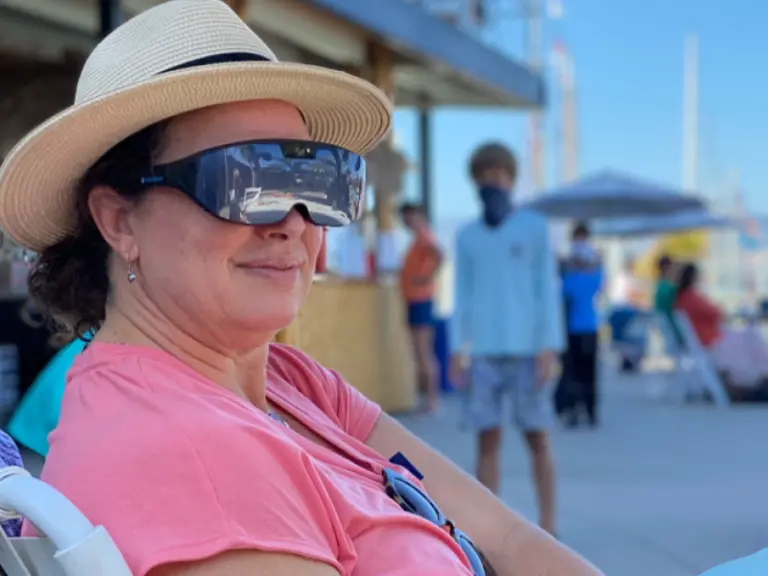
Two products hiding in one search
Glasses that talk assume vision will not do the job. A camera looks at a page or a room. Speech comes back: the words on the letter, a description of what is ahead, a label on a box. For someone with little or no usable sight, that can be the difference between waiting for help and handling the task. The success metric is a correct description, not a prettier image. There is nothing to magnify if the eye cannot use a picture.
A headset that enhances an image assumes the opposite. Some sight remains, and it is losing on size, contrast, color, or distance. The camera still looks outward. The display is for you, not for a speaker. You see the letter larger and darker. You see a face across the table. You watch a show that had become only a soundtrack. The success metric is visual: you recognize something you could not recognize a minute earlier.
Both can be called smart glasses. They serve different people, sometimes in the same family, and they should not be reviewed as if they were substitutes. A talking device that is excellent at reading a menu aloud can still leave you unable to see the person sitting across from you. An enhancing headset that is excellent at that face can still be useless if the eyes cannot parse the display.
Who should not buy a visual headset
Be direct about this, because the advertising in this category is not.
- Almost no remaining sight. If you cannot use a bright, high-contrast screen held close, a headset that depends on showing you an image will frustrate you. Start with audio reading and description, orientation and mobility training, and a low-vision or blindness-rehabilitation service.
- You need a walking aid. Processed video is the wrong sense for a sidewalk, a curb, or traffic. Do not wear Vista while walking or driving. The user guide says the same thing.
- You only need a few seconds of magnification. A handheld magnifier is simpler and cheaper for a stove dial or a pill bottle. A headset earns its place when the tasks last or move around the house.
- You want the disease treated. No pair of glasses, talking or visual, replaces injections, surgery, drops, or monitoring. An aid uses leftover function. It does not restore the chart.
If you are unsure which side of that line you are on, a low-vision clinic can measure it. “Legally blind” on a form does not settle the question. Many people who meet a legal-blindness definition still have sight a display can help. Many people who do not use that phrase have a field or a contrast problem no ordinary lens will fix.
Who a visual headset is for
You still read, or you stopped reading because it became exhausting, not because the page went fully dark. Faces have become a voice you recognize and a blur you do not. Television is something you follow by dialogue. You are tired of holding a magnifier, hunching over a stand, or staying at the one desk where a video magnifier lives.
That person has low vision in the clinical sense: reduced sight that standard glasses cannot fully correct, with something left to work with. Macular degeneration, diabetic retinopathy, glaucoma, retinitis pigmentosa, and other conditions can all land here, and they do not all need the same setting. Central blind spots, tunnel vision, and poor contrast are different problems. A device that only offers “more zoom” will help one of them and hinder another.
Vista’s point is that the picture is adjustable, not merely bigger:
- Zoom and auto-focus for print and for something across the room.
- Contrast and color when the failure is faintness or glare, not size.
- A reading line so long passages stay on one row.
- Television and scene modes so the headset is not only a page scanner.
- Options aimed at a narrowed field, where extra magnification can be the wrong first move.
- Iris, by voice, including reading a page aloud when hearing it is easier than seeing it — so the headset is not hostile to audio, it just does not pretend audio is the whole job.
- Coaching, so those controls are learned with a person, not a PDF.
The electronic glasses introduction is the shorter version of the product. Macular degeneration glasses is the condition page if central vision is the specific loss.
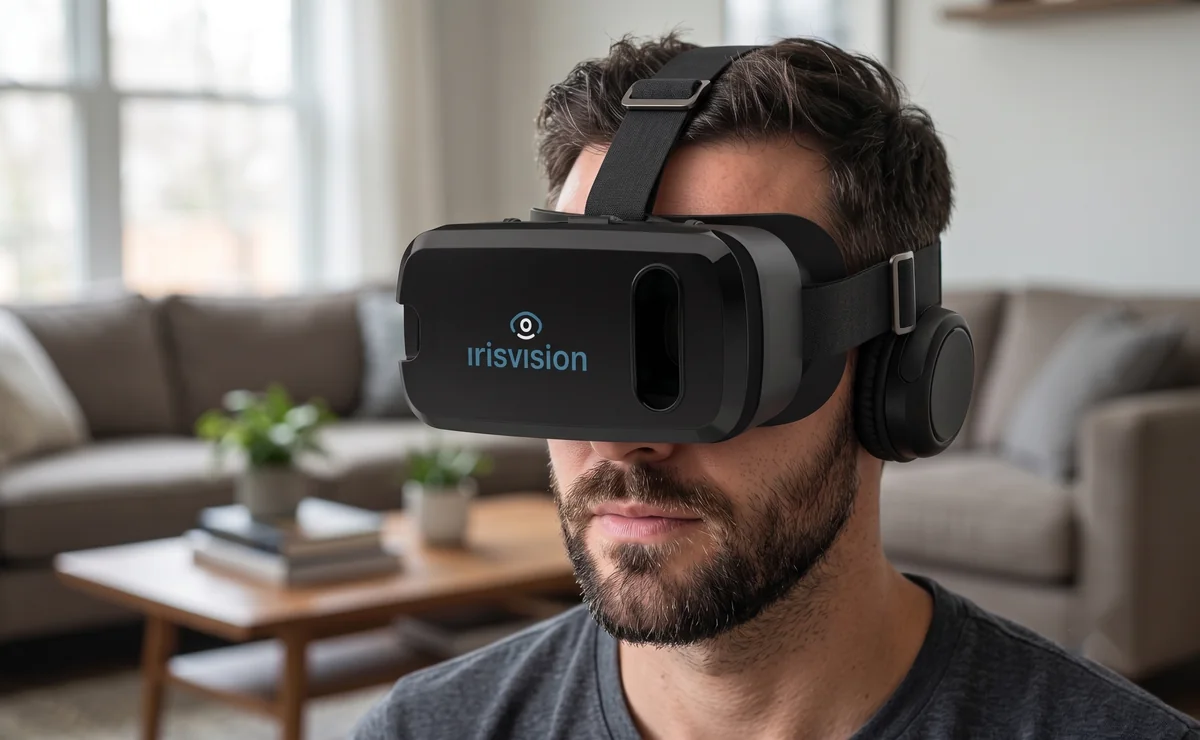
“Blind” and “low vision” are not interchangeable
Search engines treat them as one query. Clinicians do not. Blindness, in daily speech, often means little or no useful sight. Low vision means reduced sight that still supports some visual tasks once the right aid, lighting, and technique are in place. Products marketed to the first group lead with description and audio. Products that help the second group lead with the image.
IrisVision is in the second group. We say that on purpose. If a relative is shopping “for the blind” and the person they love still watches light, color, and large shapes, an enhancing headset is often the better fit, and the word on the box was the confusing part. If the person no longer uses vision for any daily task, believe that, and do not buy a display.
What to ask before you spend the money
Ignore slogans and ask these:
- Does any usable sight remain for a high-contrast screen? If a clinic or your own experience says no, stay with audio tools.
- Which tasks failed — a label, a book, a face, a television, a hobby? A single-purpose reader will not cover that list.
- Are your hands part of the task? Cooking, crafts, and letters you need to sign are why wearable beats handheld.
- Who teaches you? A capable device with no coaching becomes a drawer. Vista includes one-on-one coaching.
- What is the return path if the image does not help your particular loss? Ask before you buy. Pricing and a consultation are both starting points. The suitability quiz is a filter, not a diagnosis.
Bring your latest eye report if you have one. We would rather tell you a headset is the wrong tool than sell you one you cannot see.
Frequently asked questions
Do smart glasses for the blind restore sight?
No. Talking glasses substitute speech for vision. Enhancing headsets make remaining vision easier to use. Neither one regenerates a retina or an optic nerve, and neither one replaces medical care.
Are smart glasses the same as low vision glasses?
Often the same shopping trip, not the same device. Low vision glasses include tints and high-power spectacles as well as electronics. “Smart” usually means a camera plus software — either to talk, or to enhance an image. Read the job, not the adjective.
Can someone who is legally blind use Vista?
Sometimes. Legal blindness is a definition based on acuity or field. It does not say whether a person can use an enhanced display. If usable sight remains, a headset may help with reading, faces, and television. If it does not, audio tools are the better category.
Why isn’t magnification the main feature?
Because many people in this search are not failing only on size. They are failing on contrast, on a blind spot in the center, on a narrowed field, or on the fact that a magnifier occupies both their posture and their hands. Vista includes up to 14× zoom, and also contrast, color, reading and TV modes, voice, and coaching, so zoom is not asked to solve the whole day.
Where do I try this?
See Vista, check suitability, or contact us. If ordinary aids are the question rather than glasses, start with low vision aids.