Searches for glasses for diabetic retinopathy often come after treatment: “the swelling is down, why can’t I just get new glasses?” Because retinopathy damages the retina, not the focusing power of the lens. A refraction still matters. It is not the treatment.
This article is the glasses explainer. Disease education stays on diabetic retinopathy basics and low vision solution for diabetic retinopathy. The condition product landing is diabetic retinopathy aid.

What diabetic retinopathy does to sight
High blood sugar damages retinal blood vessels. Fluid, bleeding, and later new vessels can blur, distort, or punch holes in the picture. Central vision, side vision, or both can be involved. Some people have good days and bad days depending on swelling.
The medical path — glucose control, anti-VEGF, laser, vitrectomy — belongs with a retina specialist. The American Academy of Ophthalmology and the National Eye Institute cover that path. We do not substitute a headset for injections.
Glasses enter after (or alongside) medical care, when leftover vision is the daily problem.

Optical glasses
Clinics will still:
- Update the prescription after surgery or when swelling settles.
- Try high-add readers and better lighting.
- Use tints if glare is the main complaint.
If letters stay broken, faces stay empty, or the TV is a glow, you have reached the limit of lenses. That is low vision, not a failed optician.

Wearable electronic Low Vision Glasses
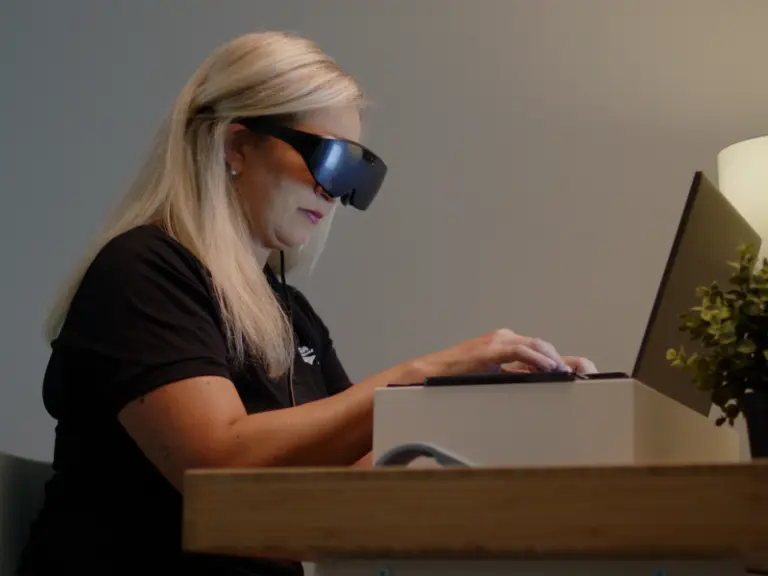
Electronic glasses use a camera and a near-eye display. Software enlarges the live view and can raise contrast so remaining retina has more to work with. IrisVision Vista is in that set — wearable electronic Low Vision Glasses, not a drugstore reader.
For diabetic retinopathy, typical jobs are:
- Reading after macular edema has left a permanent blur.
- Faces and television when central vision is patchy.
- Work and mail when you can still detect light and shape.
Iris, the voice assistant, changes zoom and modes without a small on-screen menu. Coaching is included. The headset does not treat retinopathy and does not replace follow-up exams.
Do not wear Vista while walking or driving. See the Vista user guide.
How this page relates to the rest of the site
| URL | Job |
|---|---|
| This article | What “DR glasses” means |
| Diabetic retinopathy aid | Condition product landing |
| Low vision solution for DR | Existing assistive article |
| Smart glasses for low vision | Enhancement vs AI vs Meta |
| Vista | The product |
How to try a wearable aid
If your specialist says vision is reasonably stable, a low-vision clinic can try lighting, filters, and high-add readers first. When those are not enough, a headset demo shows whether magnification of remaining sight is useful for your patchy field.
Do not skip retina follow-up because a device helps you read. Glucose control and injections still own the disease.
Take the suitability quiz, see Vista, or contact us.
Frequently asked questions
Will new glasses reverse diabetic retinopathy?
No. Treatment is medical. Glasses and electronic aids help you use leftover sight. Keep retina appointments even if a headset helps you read.
Can I use Vista during active treatment?
Ask your specialist. If vision is changing week to week, wait until they say it is reasonably stable before you invest in a device. A suitability quiz is a start, not a clearance.
Is this the same as macular degeneration glasses?
The hardware family is the same — enhancement of remaining sight. The disease and the medical follow-up are different. See glasses for macular degeneration if AMD is the diagnosis.
Where do I start?
See Vista, buy, or contact us. Bring your latest retina notes if you can.