
Age brings all sorts of challenges, vision problems, and blindness among the most common That’s why aging adults report vision problems more than anyone else, not only in the US, but around the world.
For instance, the CDC and the National Health Interview Survey report:
More than 26 million American adults experience significant vision loss or blindness even while wearing glasses or contact lenses — and the numbers rise sharply with age.
Though rapid advances in medical sciences are prompting various innovative treatments for people with low vision or blindness, not everyone gets the opportunity for treatment.
That’s why it is important to know the alternatives to costly and complicated eye procedures and treatments, for example, electronic glasses, are surely one interesting option. Here’s a list of the top 5 electronic glasses for the blind and visually impaired.
IrisVision Vista
IrisVision electronic glasses for the blind and visually impaired are a highly innovative assistive technology solution, which is redefining the concept of wearable low vision aids.
IrisVision Vista is a wearable, hands-free low-vision headset that helps people with eye problems like macular degeneration, cataracts, glaucoma, diabetic retinopathy (DR), retinitis pigmentosa (RP), and so forth.
Unlike simple electronic magnifiers, Vista is a complete low-vision companion — combining a voice-first AI assistant, a full set of vision modes, and everyday entertainment in one lightweight headset.
Find answers to frequently asked questions about IrisVision here.
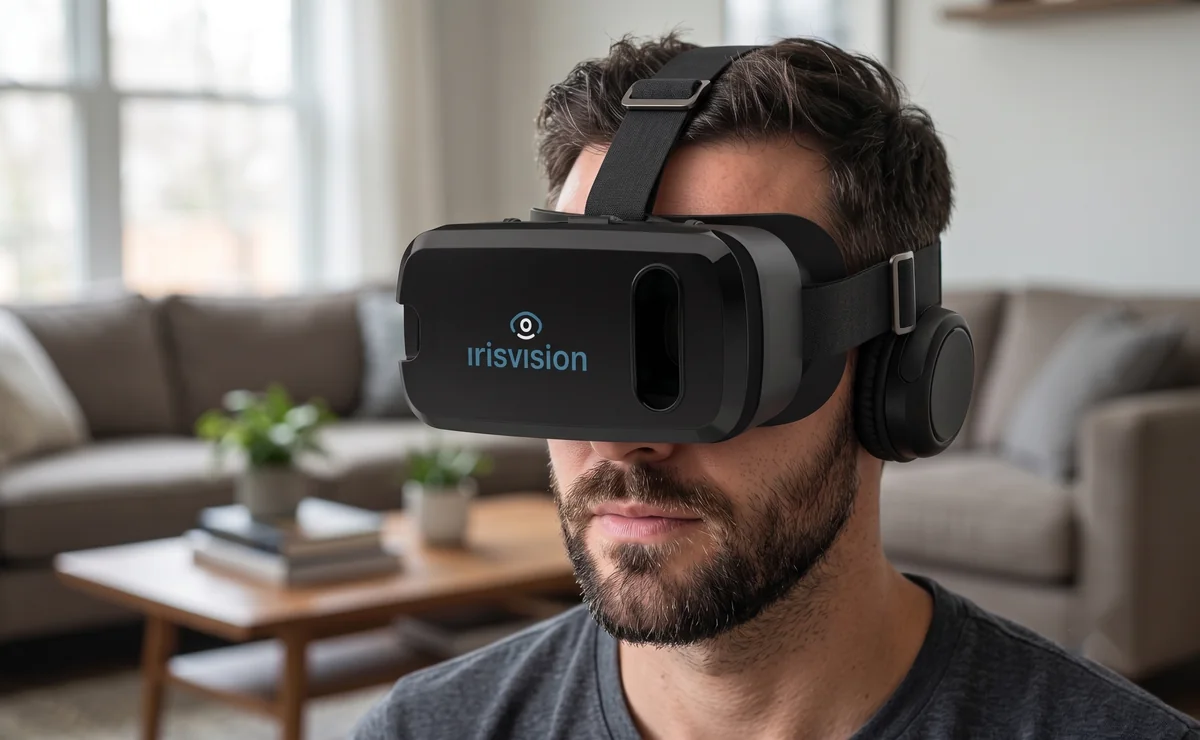
Website: irisvision.com
Features
-
Voice-first “Iris” assistant — the world’s first voice-first low-vision headset. Just speak, and Vista reads, zooms, and switches modes for you, completely hands-free and in your language
-
Up to 14x magnification with automatic focus and natural, vivid color across a wide field of view
-
A vision mode for every moment — Scene, Bubble View, ultra-high-contrast Reading (with Reading Line), a field-shrink mode for tunnel vision, TV mode, and a bold Outline mode for getting around
-
Hands-free entertainment — ask Iris to find and play YouTube videos full-size inside the headset; add the Vision Cast accessory to bring your TV and streaming into Vista
-
Lightweight and Wi-Fi-optional — controlled entirely by voice or a simple remote, with no fiddly setup or menus to learn
-
One-on-one coaching included — every Vista comes with personal coaching from trainers who are low-vision users themselves, plus free US shipping and a 30-day return policy (restocking fee applies)
2. Acesight (Zoomax)
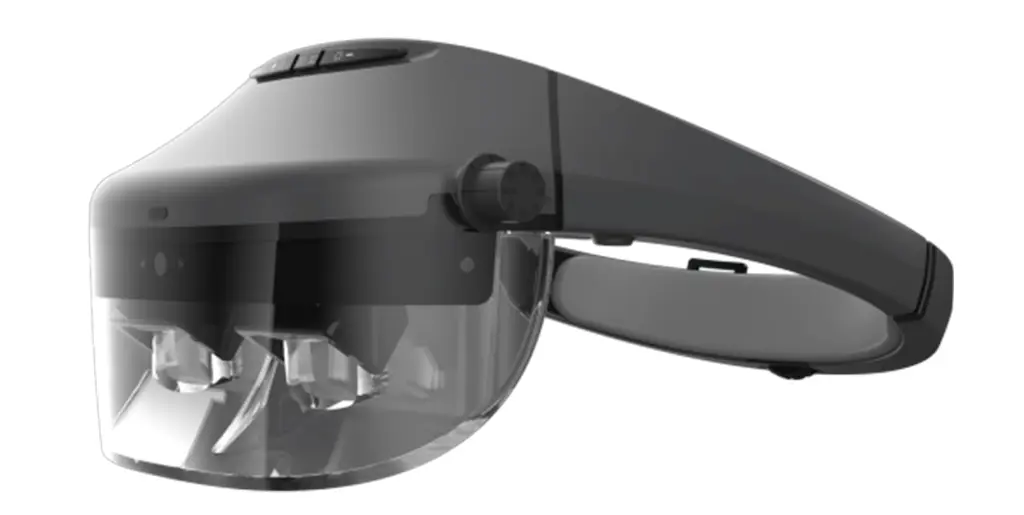
Acesight, by Zoomax, is a head-mounted electronic low vision aid that shows an HD image on a display in front of your eyes, with strong magnification and adjustable color and contrast. Unlike a fully wireless headset, it connects to a handheld controller by cable.
3. NuEyes
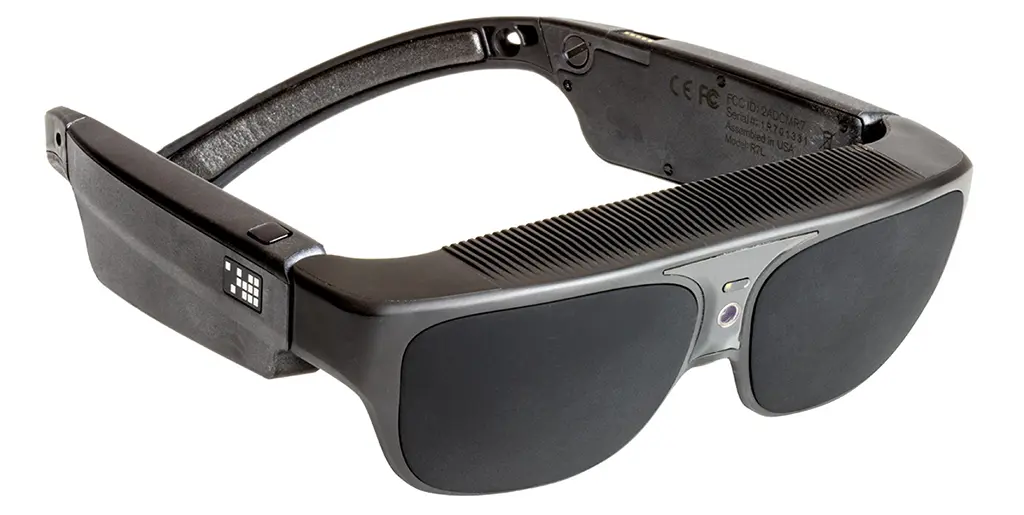
NuEyes makes lightweight, wireless smart glasses controlled by a handheld remote or voice commands, using a front-facing camera to magnify what you’re looking at. Its more recent focus has expanded toward medical and enterprise use alongside low vision.
4. OrCam MyEye
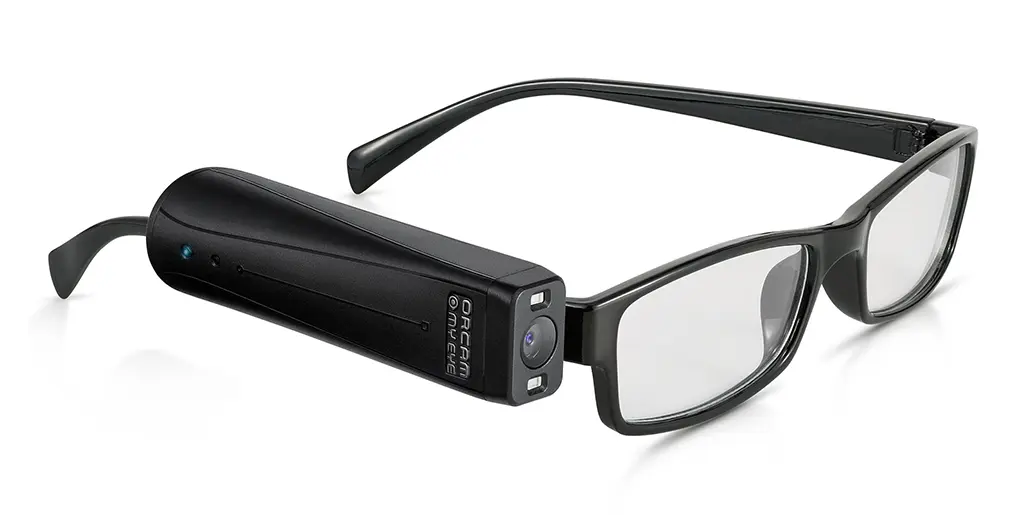
OrCam MyEye is a small camera that clips onto the side of your own glasses. It is built primarily for reading assistance — recognizing and reading aloud text, faces, and products — rather than magnifying your whole field of view.
How the top electronic glasses compare
| Capability | IrisVision Vista | Acesight | NuEyes | OrCam MyEye |
|---|---|---|---|---|
| Voice-first AI assistant | ✔ | — | Partial | — |
| Fully wireless (no cables) | ✔ | — | ✔ | ✔ |
| Full set of vision modes | ✔ | Some | Limited | Reading only |
| Up to 14x live magnification | ✔ | ✔ | ✔ | — |
| Watch TV & video inside the headset | ✔ | — | — | — |
| One-on-one coaching included | ✔ | — | — | — |
| 30-day returns* | ✔ | — | — | — |
| Most affordable of the group | ✔ | — | — | — |
Across every category that matters day to day, IrisVision Vista delivers the most complete low-vision experience — voice-first, all-in-one, and backed by personal coaching — while also being the most affordable option on this list.
Coping with vision loss is much easier said than done. Not only does one have to adapt physically to the challenges from this limitation, but one also has to strengthen yourself mentally to work around it.
To ensure you find the right solution for your specific needs,conduct thorough research on various electronic glasses alternatives and look for companies that offer a product with the best value for your money and a clear return policy.