Macular degeneration glasses
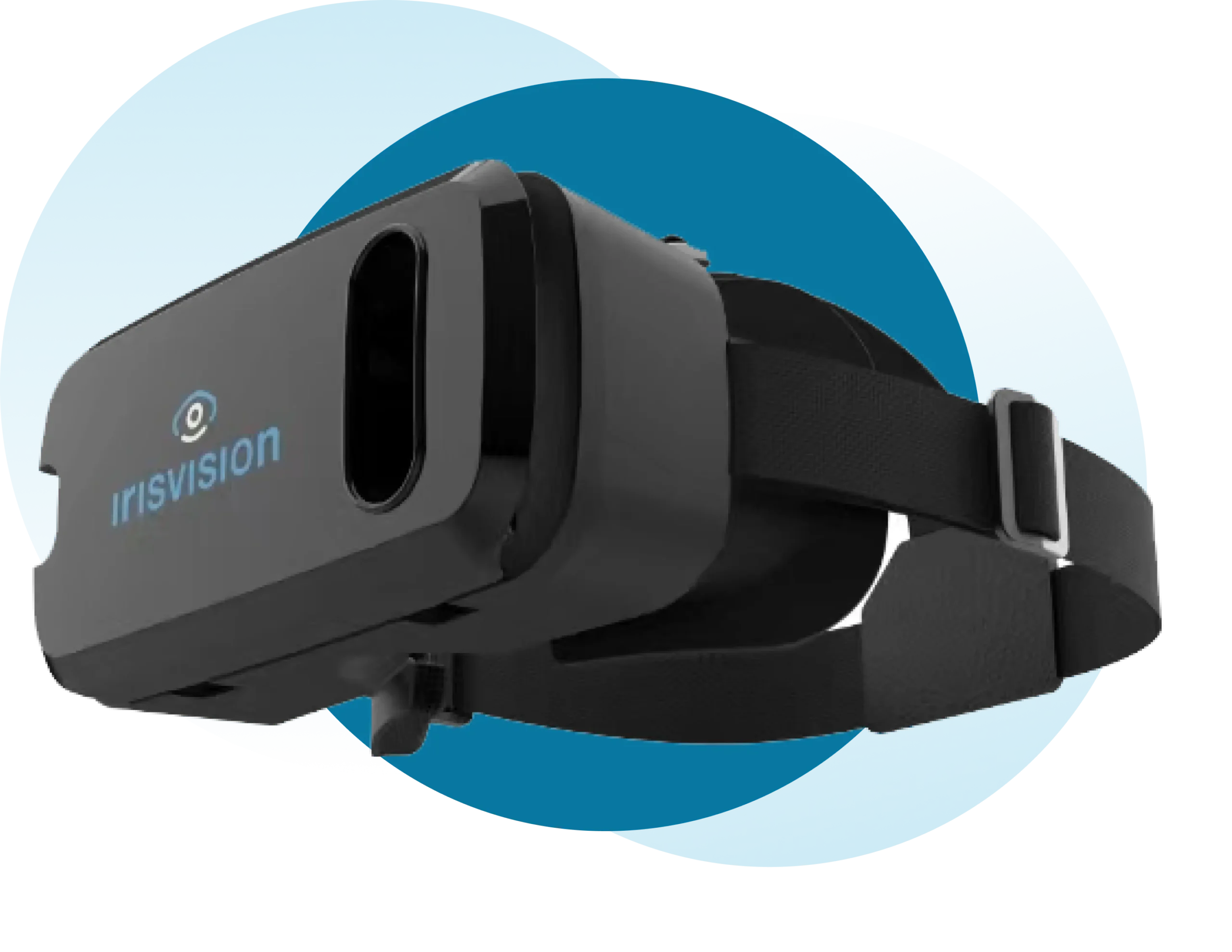
IrisVision Vista is a wearable headset that magnifies, raises contrast, and switches modes by voice, so people with macular degeneration can read, see faces, and watch TV with the sight they still have.
Get a Free Consultation
Talk to an IrisVision expert to help you see clearly, and start your new journey with award-winning low vision aids. Get in touch and we’ll help you get started.
Contact UsUnderstanding the condition
What is macular degeneration?
Macular degeneration affects the macula, the central part of the retina responsible for sharp, straight-ahead vision. As it progresses, it can blur or create a blind spot in your central vision — making reading, recognizing faces, and close detail work harder — while peripheral vision usually stays intact.
A practical guide
What macular degeneration glasses can do
Macular degeneration glasses, in the way people actually search for them, are whatever you hope will make central vision usable again. Most of what ranks for that hope is a tint, a prism, or a high-add reader. Those can reduce glare or enlarge print held close to the face. They do not rebuild the macula, and they do not turn a blind spot back into sharp sight.
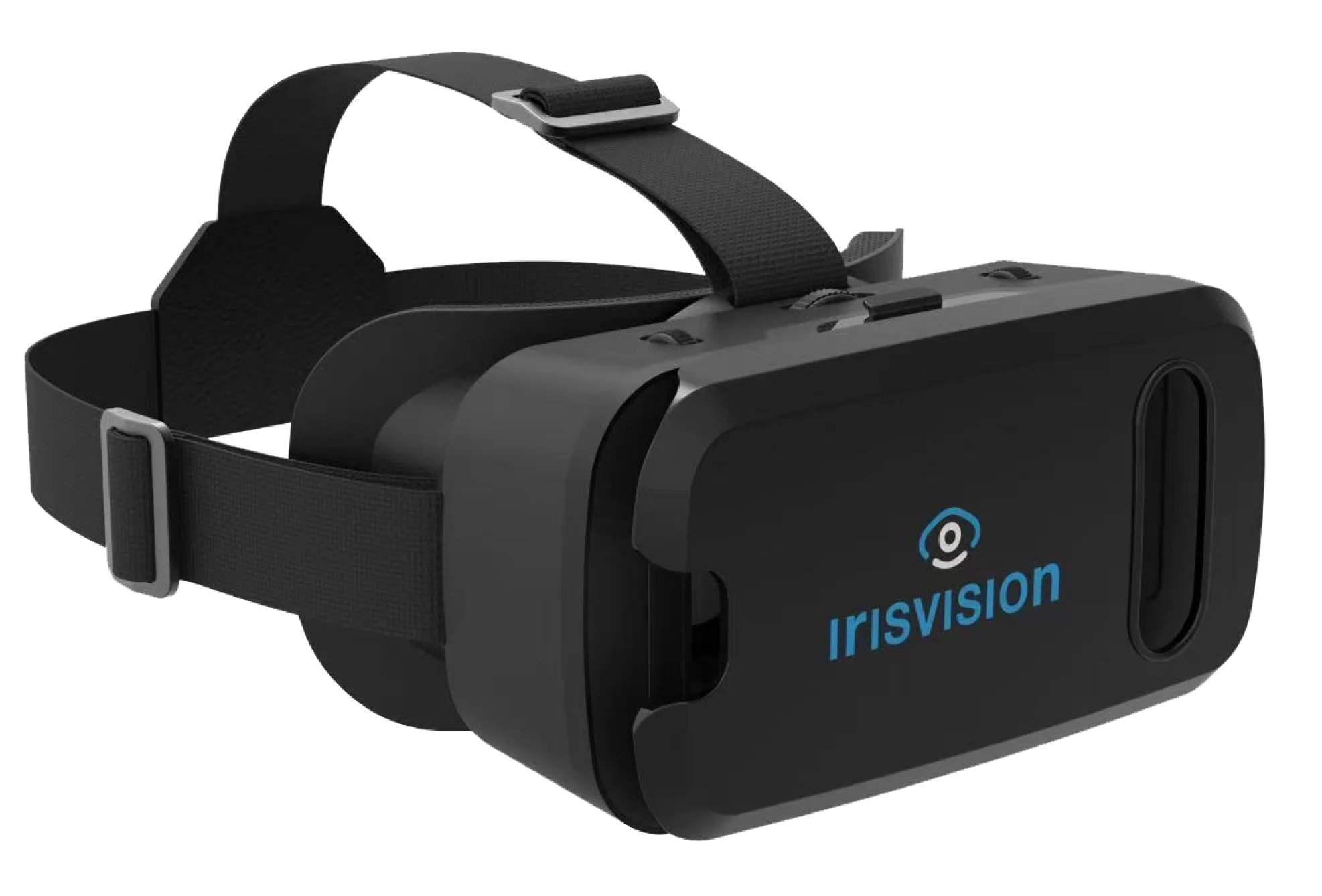
IrisVision Vista is the other meaning of the phrase: a wearable camera and display. It takes the scene in front of you and presents a larger, higher-contrast picture to the vision you still have, with color controls, modes for reading and television, voice control, and coaching. Magnification is one tool inside that system. The medical condition itself is explained on our age-related macular degeneration guide. This section stays on the glasses.
What the macula took, and what glasses can still use
The macula is the small central retina you use for print, faces, and anything you look straight at. Age-related macular degeneration damages that patch. Side vision often remains, which is why people can move through a familiar room and still be unable to read the headline or recognize someone until they speak.
Dry AMD is more common and usually slower. Wet AMD can drop central vision quickly and is treated by a retina specialist, often with injections. Glasses are not that treatment. They also do not replace the monitoring your doctor asked for. An aid starts after those decisions, when the question is how to live with the sight that is left.
A new refraction is still the right first step. Blur from an old prescription stacks on top of the retinal damage. Once focus is as good as it can be, more lens power mostly pulls the page closer and shrinks the field. If that is all a new pair did, you have reached the end of ordinary spectacles, not the end of help.
Tints, readers, and magnifiers
Low-vision clinics still start with the simple tools, and they should.
- Updated glasses — clear the focus error. Do this even if you expect little change.
- High-add readers — enlarge print at a short working distance. Fine for a paragraph. Tiring for a book, and useless for a face across the table.
- Yellow, amber, and other filters — comfort in glare for some people. They do not restore letters that the macula no longer captures.
- Handheld and stand magnifiers — a larger image, one hand occupied, or a device that lives on one desk.
- Task lighting — often a bigger change than another diopter. Some eyes want more light. Others are flooded by it.
A longer comparison of reading tools is on our reading devices page. The category those tools belong to is low vision aids. None of them is a substitute for a retina appointment.
Eccentric viewing, contrast, and why zoom is not the whole answer
With a central blind spot, looking straight at a word can hide the word. Many people learn to look slightly off to the side so a healthier part of the retina does the work. Clinics teach that. It is a skill, not a gadget, and it is worth learning before you decide electronics failed.
Magnification helps that skill by making the target larger. It also narrows what you see at once, so a page becomes a few words and a face becomes a fragment. Contrast is the other half. AMD often washes print out, not only shrinks it. A control that turns faint gray type into bright letters on a dark field can matter as much as another step of zoom. Color controls do the same job when the room is glarey or the picture looks flat.
That is why a device sold only as “14 times magnification” under-explains the problem. The people who do well have a picture they can retune, a way to keep their place on a line, and enough field to know where they are on the page.
Reading, faces, and television
Those three tasks are why families search for macular degeneration glasses after the readers disappoint.
Reading. Vista’s reading mode uses a high-contrast view and a guide line, so you move through a letter or a menu without losing the row. Iris can also read the page aloud with on-device text recognition when seeing it is the harder choice that hour. You still need usable sight for the display itself. Audio is a feature, not a claim that the headset works when sight is gone.
Faces. A magnifier on a newspaper does not help at the dinner table. A live, enlarged view at the distance people actually sit is a different job. Lighting still matters. No headset invents detail the camera cannot catch or the eye cannot receive.
Television. Many people with AMD follow a show by the soundtrack and miss the faces. A headset that can hold a stable, enlarged picture is often the reason someone looks past tinted glasses in the first place. Scene and television modes exist so zoom is not the only way to watch.
You control Vista by voice, through Iris, or with a simple remote. Both hands stay free. Wi-Fi is optional. Personal coaching is included, from coaches who use this kind of device themselves, because the first week is where unused headsets are born.
A separate article, glasses for macular degeneration, walks the optical-versus-electronic split in more detail. Low vision glasses covers the same three-way split for the broader search.
Limits, stated plainly
- Vista does not treat wet or dry AMD and does not replace your retina specialist.
- It helps when usable sight remains. If a bright screen is no longer visible, a talking aid is the more honest category. See smart glasses for the blind.
- Do not wear it while walking or driving. It is for seated and standing tasks such as reading, faces, hobbies, and television. The Vista user guide is the reference.
- A desktop video magnifier can still be better for hours of reading at one desk. Vista is the aid for a day that also includes the chair, the table, and the television.
If you want to see whether the headset fits the sight you have, take the suitability quiz, see Vista, or ask for a consultation. Cost is on the pricing page. Bring your latest eye report if you can.
Medical background, not a device review: the National Eye Institute and the American Academy of Ophthalmology explain what macular degeneration does. Glasses and headsets do not replace that care.
Will stronger glasses fix macular degeneration?
No. An updated prescription can clear a focus error, and it is still worth doing. It cannot replace damaged macular cells. If a new pair barely changes the mail or faces, the next step is a low-vision evaluation, then an aid that uses the sight you still have.
Are yellow glasses macular degeneration glasses?
They are one optical option for glare. Some people find amber or other tints more comfortable in bright light. They do not fill a central blind spot or enlarge a face across the room. If tinted readers are all you have tried, you have not yet tried a low-vision aid.
Do macular degeneration glasses work if I have a blind spot in the center?
They can, when usable sight remains around that spot. Many people read by looking slightly beside the word, which a clinic can teach. A headset adds magnification, contrast, and a guide line so that leftover vision has a clearer picture to work with. If almost no sight remains, a display will not help and audio tools are the better category.
Is IrisVision Vista only a magnifier?
Zoom up to 14× is one control. Vista is a camera-and-display headset with contrast and color, reading and television modes, the Iris voice assistant, and personal coaching. Magnification alone does not cover faces, TV, or a page you need both hands to hold.
IrisVision Vista
Redefining visual possibilities
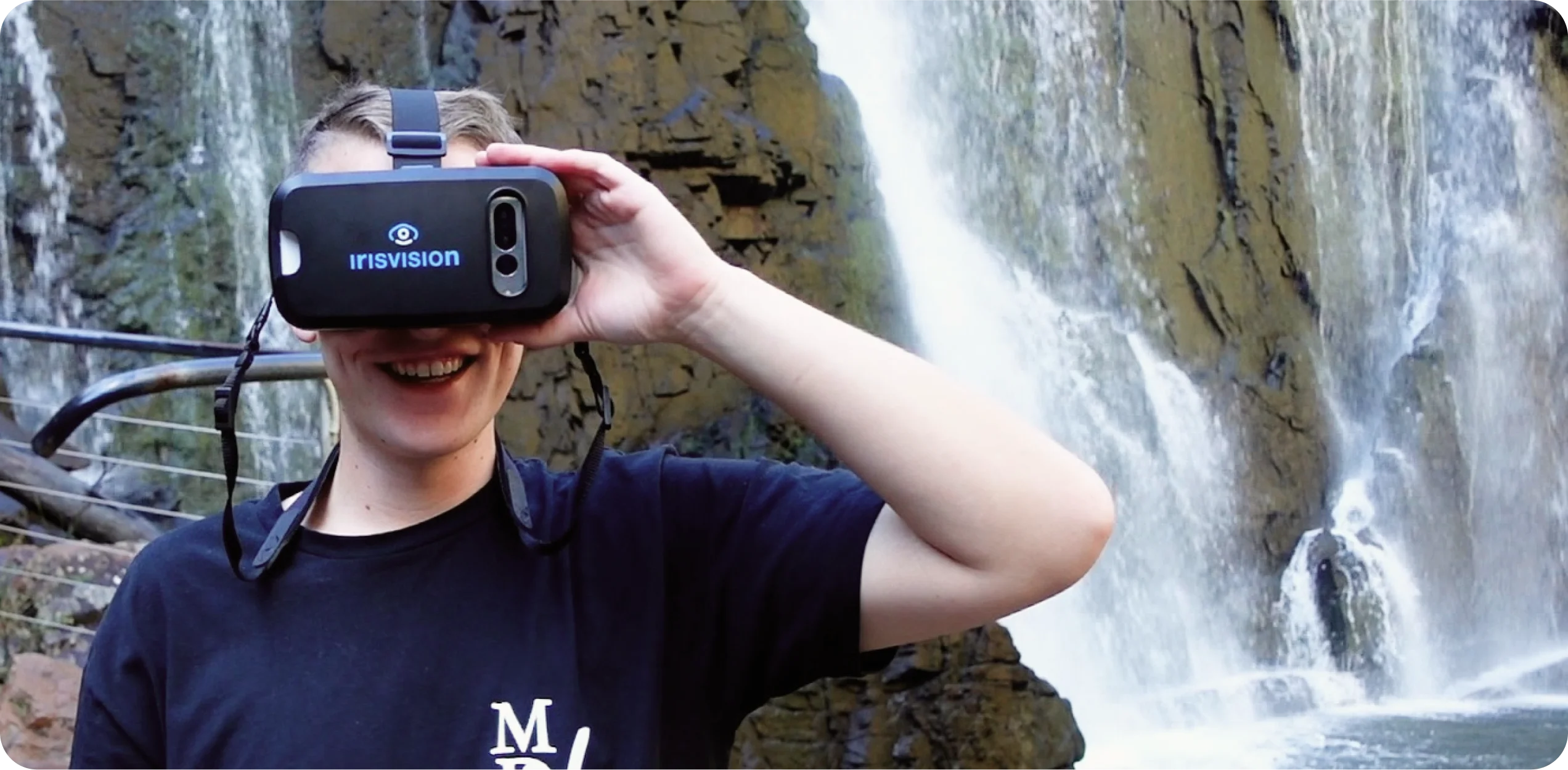
Combining leading-edge software lens technology with robust connectivity tools, IrisVision's Vista is the first ever all-in-one, wearable smart device for low vision.
See the world in a new light
Enhanced visual modes let you see more
The highly versatile features of Vista mean improved image quality, focus customization, and enhanced vision mode options:
- Focus Mode
- Scene Mode
- RP (Retinitis Pigmentosa)
- Outline Mode
- Reading Mode
Does more, weighs less
An ultra-lightweight package lets you go further
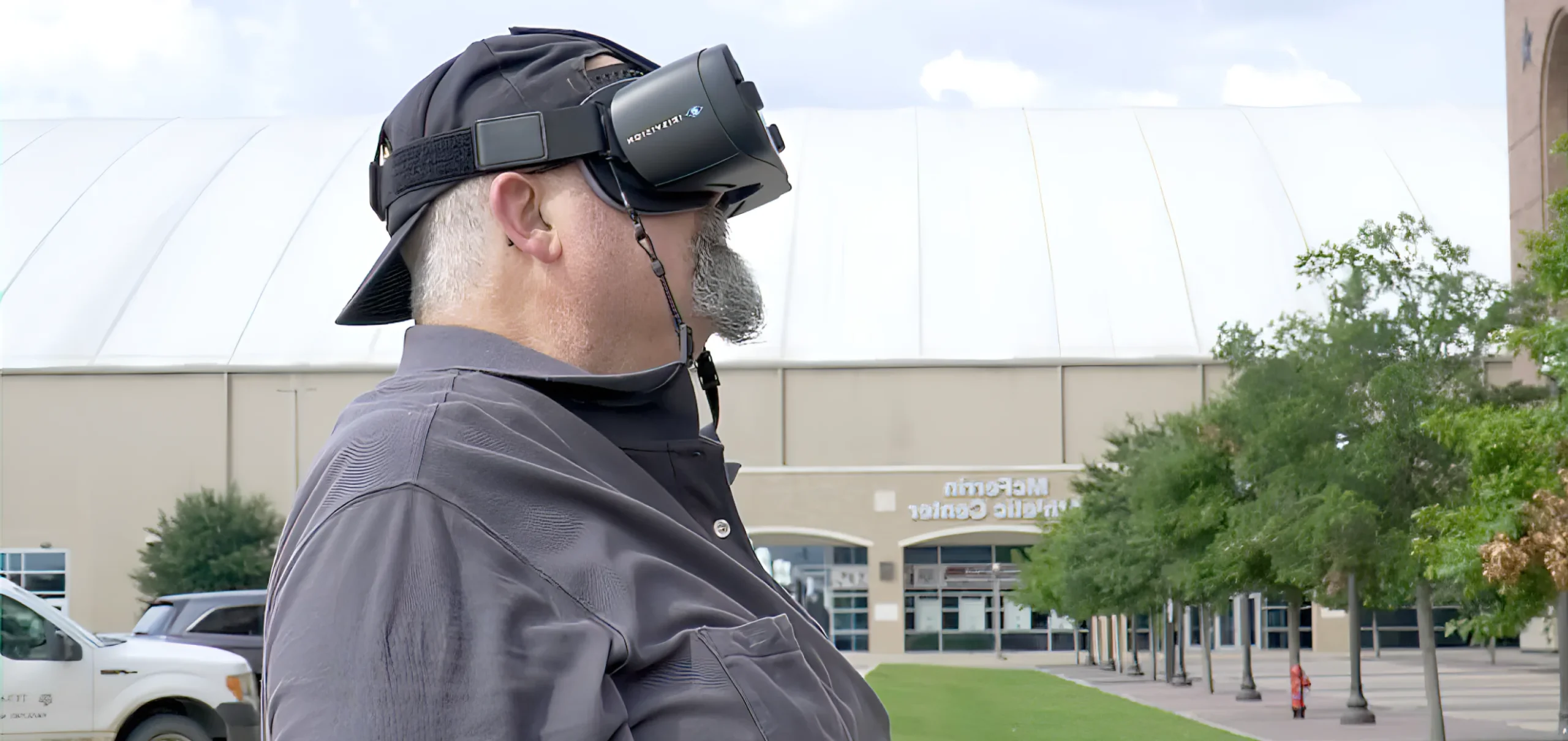
Vista delivers unmatched performance and a superior visual experience in a sleeker, lighter, more powerful headset.

An enhanced visual experience
Clarity, near and far
Experience the world around you in high definition — whether to see things in the distance, in your intermediate field of vision, or for close-up tasks. Instantaneous auto-focus, an industry-leading field of view, and up to 10× magnification bring back your ability to see and enjoy everyday life.
Trusted partners
Developed and trusted alongside leaders in vision health


The future of vision health
Neuroscience, augmented reality, and wearable technology
IrisVision synthesizes neuroscience, augmented reality, and wearable mobile devices into a new future for vision health. We worked with experts at Johns Hopkins to develop our technology, and have since helped over three thousand people to see more clearly and improve their lives.
Our community of coaches
One-on-one help, from people who understand
Our IrisVision Coaches provide one-on-one help as you learn to use your device and make the most of its capabilities. All of our Coaches are themselves low-vision persons and IrisVision users — they understand the challenges you face and are standing by to help you get fantastic results.

Hear our customers' stories
Real people, real results

The IrisVision has improved my functionality, productivity and social interactions
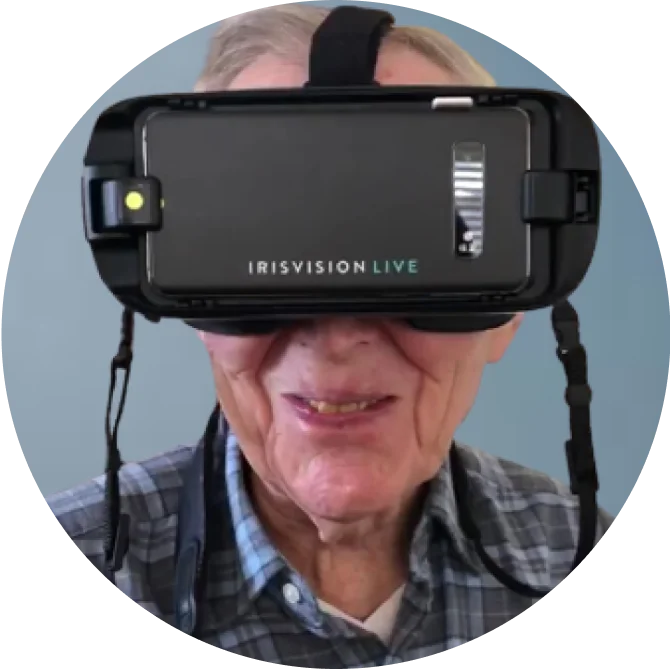
IrisVision is central to my enjoyment of family and life-long interests.
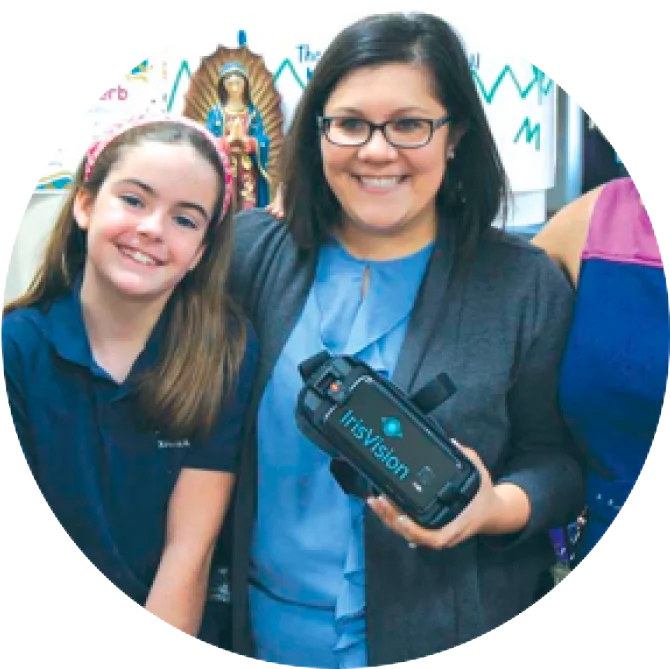
I was able to clearly see somebody in the courtyard from the upper balcony!
Try IrisVision today
Don't waste one more day not seeing what you can
Our team is standing by to help you find exactly the right headset for your specific condition and work with you to maximize the benefits you can gain from it. Contact us for your free consultation today.
Contact us now for a free consultation
Questions? We're here to help.
Reach out any time, or call us during business hours.
Call us: +1 855 207 6665
Monday – Friday: 9am – 5pm ET