
A couple of decades ago, having low vision meant that a person had to get help with nearly everything they needed to do. For visually impaired individuals, doing the most basic chores around the house can be troublesome, but more than that, it is the inability to read – medical prescriptions, food labels, or signboards, etc. – that can be the most handicapping.
If you have stumbled across this article, chances are that you have experienced the constraints of low vision first-hand. For the wider set of tools — magnifiers, video magnifiers, and wearable headsets — see our guide to low vision aids.
Whether it is your child or elderly folks in the household who are held back by vision problems, we have listed below the 10 best reading devices that are sure to hit the spot for you.
Fortunately, tech advancement in the last few years has birthed ingenious new reading devices that help make daily activities much simpler and all kinds of data more accessible for people with low vision.
These can be incredibly useful, and especially handy for reading through text at home or on the go – no matter if it’s a medicine label you’re trying to discern or browsing through the shelf tags at a grocery store, there is a gadget to help you with each task.
While there are several types of state-of-the-art vision aid devices out there, we have filtered the list down to the top 10 of our best picks, based on ease of use, practicality, and function.
Adjustable Arm Task Lamps
Adjustable arm task lamps are one of the most convenient devices for illuminating a desk space, a book, or any other working space. A task lamp typically has an extended flexible arm that you can set in a specific position according to your needs.
It is lightweight and portable, so you can easily carry it across places, to your study area or garage, and attach it to any flat surface so that it illuminates the surface of a textbook or newspaper that you want to read.
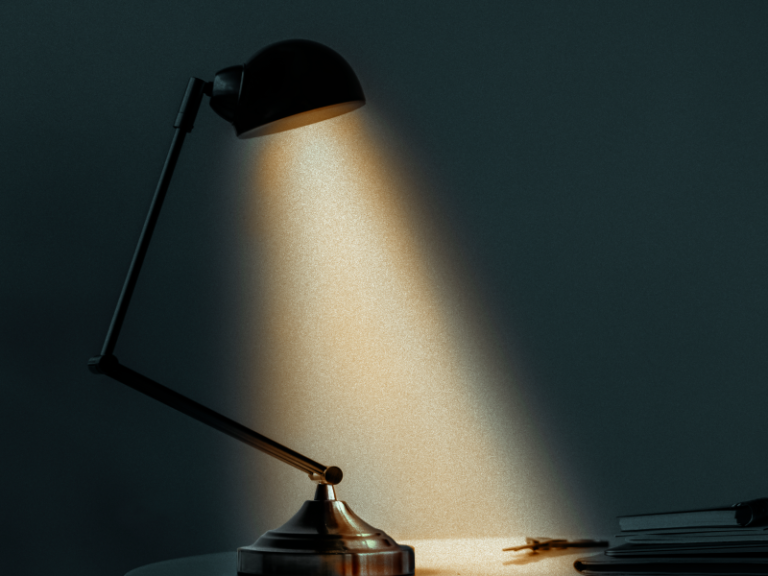
Most varieties of modern task lamps use LED lights, which means that they give off a brighter light, do not become hot, and you can adjust their brightness to suit your comfort.
All these customizations make task lamps a must-have for reading with low vision.
Features
Most task lamps have the following features:
- Adjustable arm with a long swing
- Different color temperatures (warm to white)
- LED source lights (which neither form halos nor sharp glare)
- Dimmer for increasing/decreasing luminosity
- Portable (a clamp that can be attached to any surface)
- Can be used for multiple activities e.g., reading, working, gaming, drawing, hobbies, crafts, etc.
- Widely available and reasonably priced in markets
Which Low Vision Conditions Is It Best Suited For?
This is especially useful for people who have difficulty seeing in a dimly lit environment, also called nyctalopia. Individuals who suffer from low vision conditions such as retinitis pigmentosa,macular degeneration (AMD), and cataracts often struggle to read or work in average lighting conditions, which would otherwise be enough for someone with a healthy pair of eyes.
Most people in their old age also experience night blindness as a common problem. It happens because the muscular structures within the eye become less and less flexible with time, so the pupils don’t dilate as much as needed to let the light in.
A task lamp solves that problem.
Colored Acetate Sheets
Acetate sheets are plastic-like transparent sheets that come in several different colors. For people who have reduced contrast sensitivity and poor visual acuity, colored acetate sheets can come in handy for reading texts written against a low contrast background.
A yellow acetate sheet is typically the best color to use because it brings out the text and creates a stark contrast. The text stands out as bold and clear from its background, and is much easier to spell out.
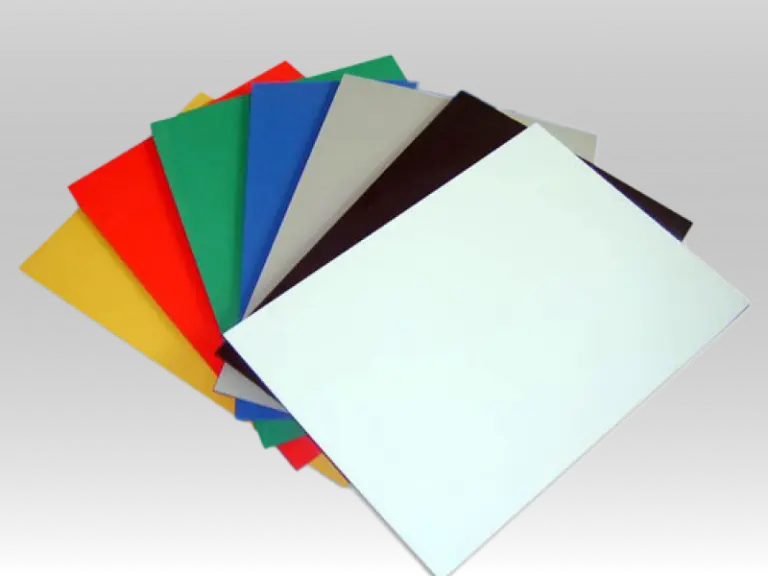
You can use acetate sheetsfor multiple purposes, such as reading a cookbook with a smaller font size, the dishwasher’s manual, etc.
Features
Acetate sheets have the following characteristics:
- Highlights text, making it easy to read
- Reduces glare while reading
- Fits over an average letter-size paper
- Available in different colors e.g., yellow, blue, red, green
- Inexpensive and easily available
Which Low Vision Conditions Is It Best Suited For?
People with low vision conditions such as cataracts, glaucoma, or diabetic retinopathy usually have difficulty with low contrast sensitivity, so they can reap the benefit of the acetate sheet.
Changes in contrast sensitivity can also occur because of old age, or may sometimes be an after-effect of refractive surgery. In either case, you can opt to use acetate sheets for a trouble-free reading experience.
Absorptive Lenses/ Glasses
In the above paragraphs, we’ve talked about low vision aids that are most suitable for reading indoors. So what to do when you step outside and the blazing sunlight shines right into your eyes, making you squint in an effort to see properly?
Absorptive glasses are just the right thing for this.
Absorptive lenses are worn as wraparound glasses and are typically tinted in amber, orange or yellow color. These glasses reduce glare and increase contrast, thus improving vision, especially outdoors. The design prevents the sun’s rays from leaking into the corners of the glasses, while the tint also controls the amount of light that passes through.
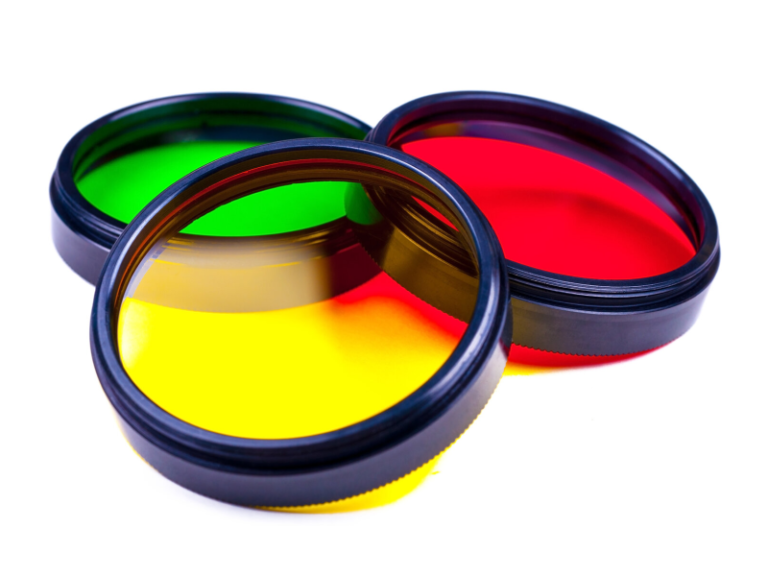
When your optometrist prescribes absorptive glasses, it typically includes a percentage that identifies the amount of light that passes through the lens and a color that specifies the tint of the lens. This specification is different for every individual’s visual needs.
For instance, your optometrist may prescribe a 32% gray or a 10% medium amber shade for you.
Features
Absorptive glasses have the following key features:
- Reflects harmful UV rays
- Blocks out glare from bright light
- Improves visual clarity in sunlight
- Enhance contrast for improved vision
- Also useful indoors
- Also available as clip-on lenses/fits over your regular glasses
Which Low Vision Conditions Is It Best Suited For?
Some amount of glare is a normal reaction to bright light, but disability glare is caused as a result of low vision conditions, and if it is too intense, it can completely impair vision.
Glare is a common symptom in low vision conditions such as cataracts and age-related macular degeneration (AMD). It significantly hinders the ability to see or read outdoors. With absorptive glasses, you can have the relief of being able to look through the signboards and directions without your vision being interrupted.
LED Hand-held Magnifier
A pocket magnifier is a small handheld magnifying glass, that is lightweight and portable and can provide magnification of up to 4x the original size of the text. In addition to this, most pocket magnifiers also have an LED light installed that illuminates the text for enhanced viewing.
Pocket magnifiers are best used for reading small print, such as newspapers, medical prescriptions, directions on food cans, etc. You can easily carry it around in your pocket or handbag, as it’s both lightweight and compact in design.
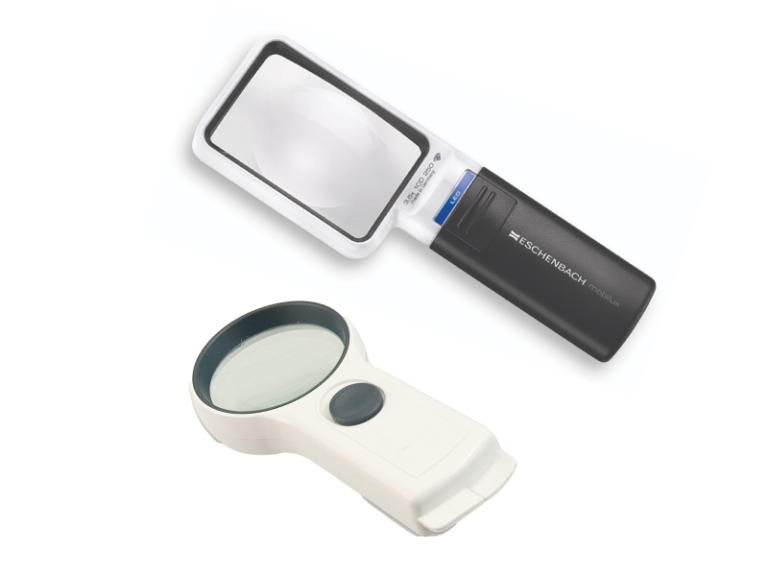
According to the AAO,) nearly 14.2 million people in the US aged 40 or older are hyperopic (farsighted). For people with farsightedness, a pocket illuminated magnifier such as this magnifying lens by iLumen8 can be an incredibly helpful reading device.
Features
Pocket magnifiers have the following key features:
- Typically enlarges text up to 4x (this power varies across devices)
- Illuminates the reading surface
- Lightweight
- Easy to carry around in a pocket or purse
- Ideal for outdoor use e.g. reading a menu in a restaurant, checking food labels, etc.
Which Low Vision Conditions Is It Best Suited For?
Far-sightedness is a fairly common condition. It usually affects vision with growing age, and frequently occurs as a symptom of other low vision conditions.
While there are not many permanent treatments for farsightedness, especially when it is caused as a result of another low vision condition, a hand-held magnifier can significantly help.
Typoscope
A typoscope is a reading shield of sorts that is made out of black plastic and has a rectangular slot cut out in it. Using a typoscope while reading lets you focus on a single line at a time, while blocking out other text from view and helps reduce glare.
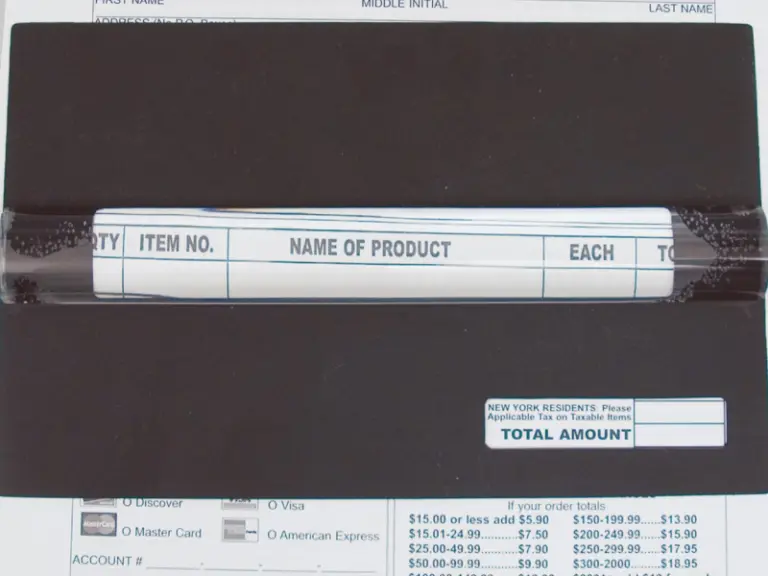
This device is particularly useful for enhancing focus, increasing contrast, and keeping track of where you are reading on the page, which can be otherwise difficult for people with a loss of visual field.
Which Low Vision Conditions Is It Best Suited For?
People who have cataracts, glaucoma, and diabetic retinopathy may find a typoscope helpful for reading, as it provides high contrast.
If you have been affected by partial loss of the visual field as a result of a stroke or any eye disease, then a typoscope can help you read.
Reading Glasses
If you’re looking for a device to assist you during lengthy reading, for instance, work-related tasks or reading a novel, magnifying reading glasses are the best pick.
They are also known as “microscopes”, given their function of magnifying text and objects. Unlike a handheld magnifier ,reading glasses let you see a magnified picture across a wide field of view, so you can comfortably browse through the pages of your textbook without losing the frame of reference.
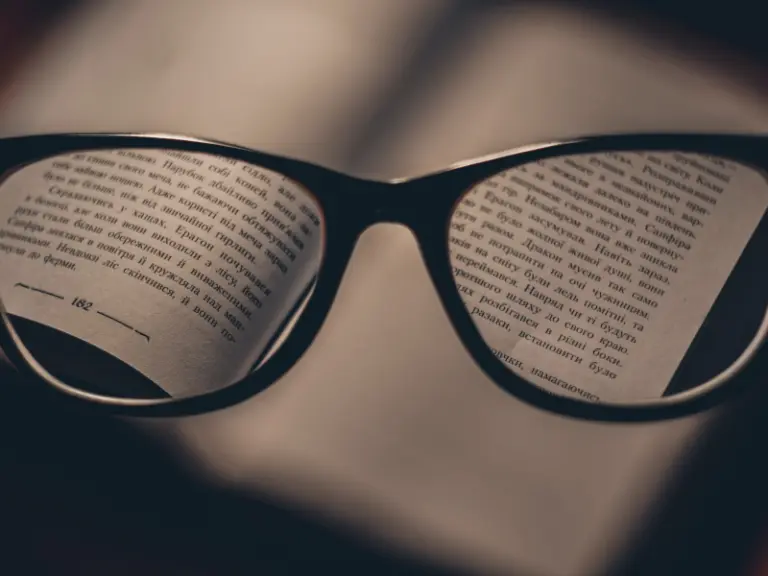
Aside from reading, these glasses are well-suited for doing craftwork, writing, etc., because while wearing them, you can keep your hands free for any other task.
Features
Reading Glasses have the following features:
- High magnification power
- A wider field of view
- Comfortable and lightweight to wear
- Best suited for prolonged reading activities
- Keeps your hands free, allowing you to multitask
Which Low Vision Conditions Is It Best Suited For?
Reading glasses are usually best suited for people who have a mild visual disability, such as hyperopia, or are in the early stages of diabetic retinopathy.
In conditions such as advanced stages of diabetic retinopathy, macular degeneration, and glaucoma, blind spots are formed and disrupt vision so much that simpler vision aids like magnifying reading glasses cannot correct it.
CCTV Magnifier (Closed Circuit Television)
CCTV magnifiers are typically a system that includes a customized camera, a stand for hands-free camera placement, a monitor, and lenses (with up to 82x magnification power).
You can install a CCTV system in your house or workplace. Once you place the information to be read in front of the camera, it is then displayed on the monitor with different options for you to customize it. You can control the magnification and focus according to your needs, as well as change the contrast, brightness, and other screen settings.
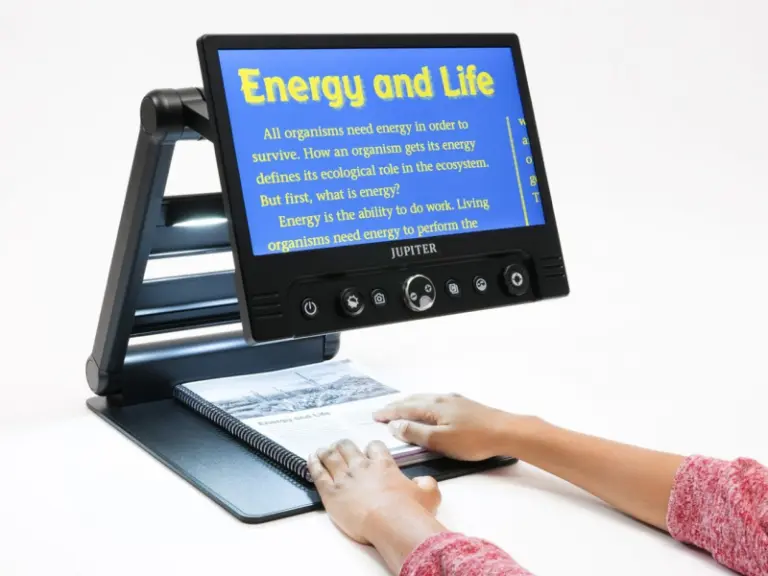
One of the great features of CCTV systems is their real-time video magnification, which makes performing hands-on activities much less troublesome. You can effortlessly do things like reading, writing, painting, or other crafts.
Which Low Vision Conditions Is It Best Suited For?
CCTV systems can assist people who have macular degeneration, glaucoma, cataracts, retinitis pigmentosa, or diabetic retinopathy.
However, you must browse through different systems to find what you need. Also, CCTV’s can be an expensive purchase and can only be used in a stationary position.
Handheld Video Magnifier
Think of a handheld video magnifier as your personal tablet computer, except that it shows the things around you in real-time with increased visual clarity and brilliance.
The video magnifier has an auto-focus camera, a large HD display, and a lightweight design, making it user-friendly. To skim easily across any text, you can hover the magnifier over the text and it will show you the same page/object in a sharp and vivid view, magnifying the content up to 18x. The magnifying power may vary across different devices.
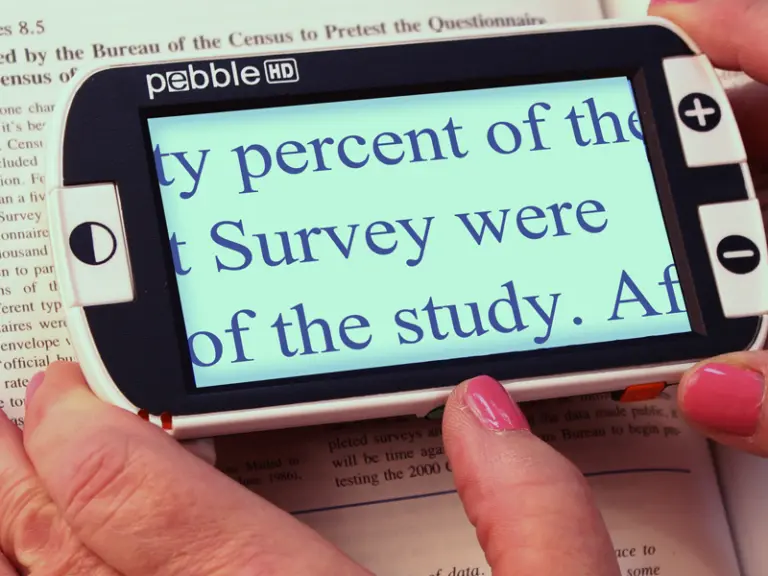
Some of these systems are also stand-mounted and allow hands-free activity.
You can use a video magnifier for many tasks, ideally for near-viewing tasks such as reading a newspaper or a book, or far-viewing tasks such as reading from the classroom blackboard.
Video magnifiers, such as the Clover 10 handheld video magnifier, also include different color contrast modes, which you can switch according to your visual preferences.
Features
Handheld video magnifiers have the following features:
- A wide display for reading
- Lightweight and easy to carry around
- Provides a highly magnified view
- Can be used for both near-viewing and far-viewing
- Different color modes
Which Low Vision Conditions Is It Best Suited For?
Video magnifiers can be helpful for people who have low vision conditions such as glaucoma, retinitis pigmentosa, and cataracts. With a wider display unit, you can read and see any material effortlessly.
Screen Reader Software
Screen readers are computer software that changes the interface between the computer’s operating system, its applications, and the end-user in such a way as to make it accessible for visually impaired people.
By learning to use different commands, you can get a screen reader softwareto perform various functions, such as spelling a word on the computer screen, finding specific text on the screen, reading a sentence aloud, etc.
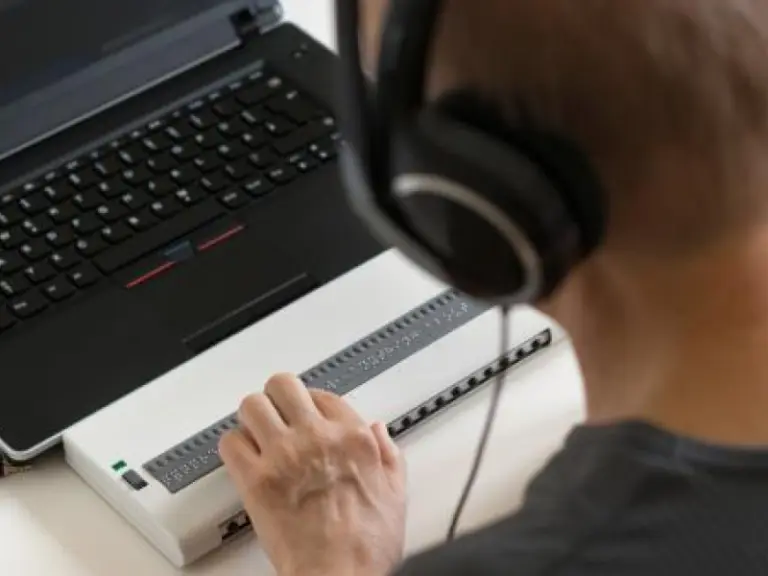
Although screen reader software does not technically count as a reading device, as others mentioned on this list, however, we have included these to this list based on how effective and useful they can be for reading on your PC.
There are several different software, each with different features. Here are some of the best free screen readers you can choose from.
One of the best software includes COBRA, which helps you access information on your computer screen with features such as text-to-speech, braille format, and magnified view
Features
Screen reader software have the following features:
- Screen magnification up to 32x (varies depending on software)
- Clear and distinct speech output allows skimming content without reading through each line
- Different color/contrast viewing modes
- Some softwares allow content to be shown in Braille display
- Considerably helpful in the workplace, classroom, or other academic activities
Which Low Vision Conditions Is It Best Suited For?
People whose low vision conditions cause severe vision loss, hinder their academic activities, or limit them from performing in the workplace, have the most to gain from screen reader software.
As these softwares are designed particularly for your PC, they can be run over Windows, Linux, or other operating systems.
Screen readers can be vastly helpful in the workplace and for academic activities, allowing you to overcome the visual challenges and be able to carry out work responsibilities with ease.
Electronic Low Vision Glasses
As we draw towards the conclusion of this list, let us acquaint you with the most advanced low vision aid so far — and one of the most versatile reading devices.
Electronic low-vision glasses are wearable, hands-free headsets with a high-definition camera that captures what’s in front of you and enhances it to suit your vision in real time.
There are several brands of low vision glasses, each with different features.
IrisVision Vista has emerged as one of the most capable — recognized in the Fast Forward series of The New York Times.
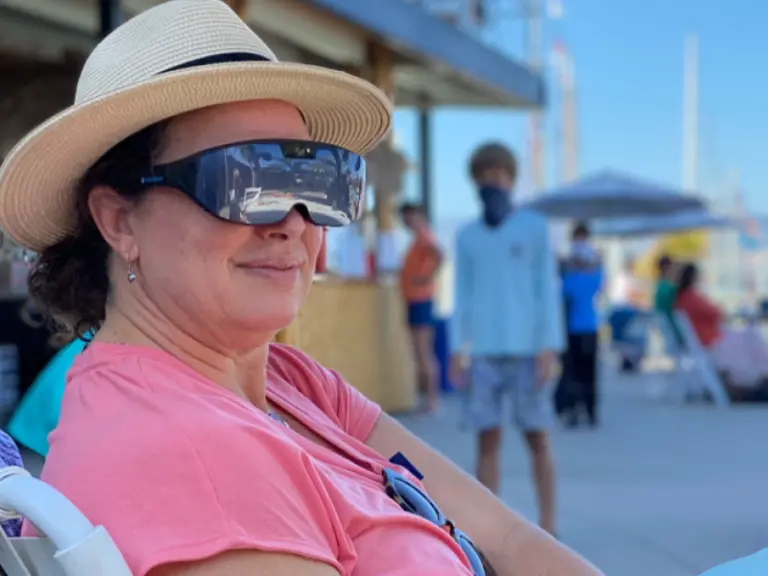
IrisVision Vista is built specifically to help people with low vision read, watch TV, and see faces again — and it offers some of the most comprehensive reading tools of any device on this list.
Its reading tools include:
- Reading mode with Reading Line: high-contrast, bold text with a highlighted guide bar that isolates one line at a time — like a typoscope, but adjustable — so you can move through long passages comfortably, even in dim light.
- Voice-first “Iris” assistant: just speak, and Vista reads aloud for you. Using on-device text recognition (OCR), Iris scans a page — a letter, a menu, a prescription — and reads it back, hands-free and in your language.
- Bubble View: magnifies one area without losing the wider scene around it — ideal for reading a small price tag or label while staying oriented to your surroundings.
- Up to 14x magnification with auto-focus, plus TV and Outline modes for everything beyond the page.
Unlike single-purpose reading aids, Vista is controlled entirely by voice or a simple remote, works with Wi-Fi optional, and comes with one-on-one coaching and a 30-day return policy (restocking fee applies).
With these clinically validated electronic glasses, you can read, watch TV, or enjoy hobbies — at home, in a restaurant, or out in public — all with one device.
Which Low Vision Conditions Is It Best Suited For?
IrisVision electronic glasses are unique in that they assist people with various low vision conditions, such as:
- Age-related Macular Degeneration
- Diabetic Retinopathy
- Retinitis Pigmentosa
- Ocular Albinism
- Stargardt Disease
- Optic Atrophy and more.
How the top reading aids compare
| Capability | IrisVision Vista | Handheld/CCTV magnifier | Reading glasses | Screen reader |
|---|---|---|---|---|
| Reads text aloud (OCR) | ✔ | — | — | ✔ |
| Adjustable magnification | ✔ | ✔ | Fixed | — |
| High-contrast reading modes | ✔ | Some | — | Some |
| Voice-first, hands-free control | ✔ | — | — | — |
| Works up close AND across the room | ✔ | — | — | — |
| Beyond reading (TV, faces, getting around) | ✔ | — | — | — |
| One-on-one coaching included | ✔ | — | — | — |
Most reading aids solve one part of the problem — magnifying, lighting, or reading text aloud. IrisVision Vista brings those abilities together in a single wearable device, then adds a voice-first assistant, everyday entertainment, and personal coaching — so it keeps helping long after the page is read.